Introduction
University is more than a place to earn a degree. It is also an important stage for preparing for your future career. The choices you make during your university years can influence the skills you develop, the experience you gain, the people you meet, and the opportunities available to you after graduation.
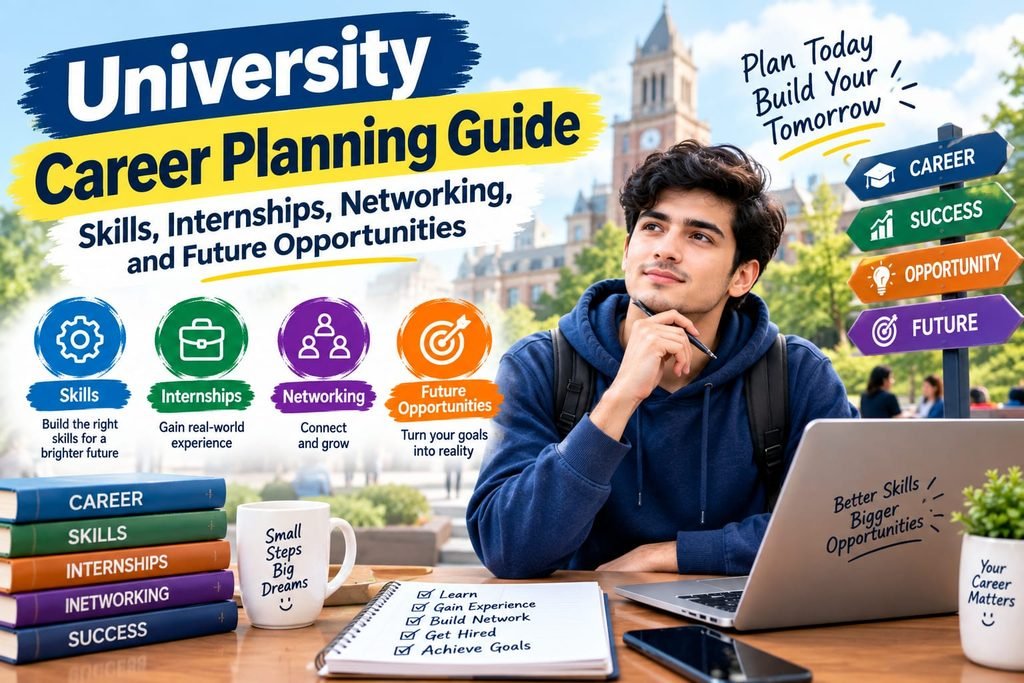
Career planning does not mean deciding exactly what job you will have for the rest of your life. Instead, it means understanding your interests, exploring possible career paths, developing useful skills, gaining practical experience, and making informed decisions about your future.
Whether you are just starting university or preparing for graduation, it is never too early or too late to begin career planning. This guide explains practical steps students can take to build a stronger professional future.
Why Career Planning Matters for University Students
A university degree can provide academic knowledge, but employers often look for more than qualifications. Communication, teamwork, problem-solving, technical abilities, adaptability, and practical experience can all contribute to career development.
Starting career planning early gives students time to:
- Explore different career options
- Identify personal strengths and interests
- Develop professional skills
- Find internships and work experience
- Build a strong CV or resume
- Create professional connections
- Prepare for job interviews
- Understand employer expectations
Good career planning is flexible. Your goals may change as you discover new subjects, industries, or opportunities.
Understand Your Interests and Strengths
The first step in career planning is understanding yourself. Think about the subjects you enjoy, activities that motivate you, and tasks you naturally perform well.
Consider questions such as:
- Which university subjects do I enjoy most?
- What type of work keeps me interested?
- Do I prefer working independently or with a team?
- Am I interested in creative, technical, business, research, or service-oriented work?
- What skills do other people recognize in me?
- What type of working environment would suit me?
You can also speak with professors, academic advisors, career counselors, and professionals working in fields that interest you.
Self-awareness can help you avoid choosing a career simply because it is popular or because someone else expects you to pursue it.
Explore Different Career Options
Once you understand your interests, research possible career paths connected to your degree and skills.
For example, a student studying business may consider careers in marketing, finance, human resources, consulting, sales, entrepreneurship, or operations. A computer science student might explore software development, cybersecurity, data analysis, artificial intelligence, or information technology.
Do not limit yourself to one career immediately. Research several options and compare:
- Typical responsibilities
- Required qualifications
- Important skills
- Entry-level opportunities
- Work environments
- Professional development opportunities
Exploring different paths can help you make better decisions about courses, internships, and extracurricular activities.
For students still deciding which academic direction fits their goals, the [How to Choose the Right University: A Complete Guide for Students] can also provide useful guidance.
Build Professional Skills
Academic knowledge is important, but professional skills can help students apply that knowledge in real-world situations.
Communication Skills
Strong communication is useful in almost every profession. Practice writing clearly, speaking confidently, presenting information, and listening carefully.
University assignments, presentations, group projects, and student organizations can all provide opportunities to improve communication.
Teamwork
Many workplaces require employees to collaborate with colleagues. Group assignments and university projects can help you learn how to share responsibilities, solve disagreements, meet deadlines, and contribute to a common goal.
Problem-Solving
Employers value people who can identify problems and develop practical solutions. Strengthen this skill by working on projects, case studies, research assignments, competitions, and real-world challenges.
Digital and Technical Skills
Technology is part of many modern careers. Depending on your field, useful skills may include spreadsheet software, data analysis, graphic design, programming, content creation, project management tools, or industry-specific software.
Choose technical skills that are relevant to the career paths you are considering.
Adaptability
Career paths can change over time. Learning how to adapt to new tools, responsibilities, technologies, and working environments can make you more prepared for professional life.
Find Internships
Internships can give university students an opportunity to experience professional work before graduation. They can also help students understand whether a particular industry or role matches their expectations.
When searching for internships, consider:
- Your field of study
- Your current skill level
- The type of experience you want
- Internship duration
- Responsibilities
- Learning opportunities
- Location or remote-work options
Do not focus only on famous companies. A smaller organization may provide valuable hands-on experience and allow you to work closely with experienced professionals.
Start searching early because application deadlines can vary significantly.
Gain Practical Experience
Internships are not the only way to gain experience. Students can also build practical knowledge through:
- Freelance projects
- University research
- Student organizations
- Volunteer work
- Competitions
- Personal projects
- Part-time work
- Campus activities
For example, a marketing student could create a small digital marketing project. A computer science student could build a portfolio website or software project. A design student could develop a collection of original work.
Practical projects give you something concrete to discuss when applying for internships and jobs.
Create a Strong Student CV
A CV or resume introduces your education, skills, experience, and achievements to potential employers.
A student CV does not need to be filled with years of professional experience. Instead, focus on relevant achievements and evidence of your abilities.
A useful student CV may include:
- Contact information
- Short professional profile
- Education
- Relevant skills
- Internships
- Projects
- Volunteer experience
- Academic achievements
- Certifications
- Relevant extracurricular activities
Keep the information clear and organized. Avoid adding unnecessary personal details or making unsupported claims about your abilities.
Whenever possible, adjust your CV to match the position you are applying for.
Build a Professional Online Presence
Your online presence can become part of your professional identity. Students can use professional platforms and personal portfolios to showcase their skills and achievements.
Depending on your field, you may create:
- A professional networking profile
- An online portfolio
- A personal website
- A project portfolio
- A professional social media presence
Make sure the information is accurate and professional. If you have completed projects, published research, created designs, or developed software, an online portfolio can provide evidence of your work.
Build Your Professional Network
Networking is not simply about collecting contacts. It is about developing genuine professional relationships.
Students can begin networking through:
- University events
- Career fairs
- Workshops
- Academic conferences
- Alumni events
- Student societies
- Professional organizations
- Internships
Professors and university alumni can also be valuable sources of career information. They may help you understand industry expectations, identify useful skills, or learn about opportunities.
When contacting professionals, be respectful and specific. Instead of immediately asking for a job, ask thoughtful questions about their career path or industry.
Use University Career Services
Many universities provide career-related resources for students. These may include career counseling, CV reviews, interview preparation, job boards, career fairs, workshops, and employer events.
Students should find out what services their university offers and use them before graduation.
Career advisors can also help students identify suitable career paths and improve application materials.
Prepare for Job Interviews
Interview preparation can make the job-search process less stressful. Start by learning about the organization and understanding the position you are applying for.
Practice explaining:
- Your educational background
- Your relevant skills
- Your projects and experience
- Why you are interested in the position
- How you solve problems
- Examples of teamwork
- Your professional goals
Use real examples whenever possible. If you have limited work experience, university projects, volunteer activities, internships, and extracurricular experiences can provide useful examples.
Volunteering and Extracurricular Activities
Activities outside the classroom can also contribute to career development. Volunteering, student societies, competitions, sports, leadership activities, and community projects can help develop transferable skills.
For example, organizing a university event may demonstrate planning, communication, teamwork, and leadership.
The goal should not be to collect activities simply to make your CV longer. Choose activities that genuinely interest you and provide opportunities to learn.
Preparing for Life After Graduation
As graduation approaches, begin thinking about your next step.
Possible paths include:
- Full-time employment
- Graduate programs
- Further education
- Professional certifications
- Entrepreneurship
- Freelancing
- Research
- Internships or traineeships
Research application deadlines and requirements early. Some graduate programs and employment opportunities recruit months before graduation.
Students should also prepare a realistic financial plan for the transition from university to professional life.
Understanding university costs and financial planning can be useful throughout your education. You can explore the [University Scholarships and Financial Aid: A Complete Guide for Students] for additional information about funding and managing education expenses.
Common Career Planning Mistakes
Students can sometimes make career planning more difficult by waiting until their final semester or focusing only on academic grades.
Common mistakes include:
- Waiting too long to gain experience
- Choosing a career without researching it
- Ignoring transferable skills
- Creating the same CV for every application
- Avoiding networking
- Not preparing for interviews
- Depending only on a university degree
- Applying for opportunities without meeting their requirements
- Comparing their career progress with other students
Career development is a gradual process. You do not need to have everything figured out during your first year.
Student Career Checklist
Use this checklist to review your career preparation:
- I understand my main interests and strengths.
- I have researched several possible career paths.
- I am developing relevant professional skills.
- I have looked for internships or practical experience.
- I have a current CV or resume.
- I have examples of projects or achievements to discuss.
- I am building a professional online presence.
- I have started developing professional connections.
- I know what career services my university provides.
- I am practicing interview skills.
- I have considered my plans after graduation.
Students can also strengthen their academic habits while preparing for their careers. The [Effective Study Strategies for University Students: A Practical Guide to Better Learning] provides practical ideas for improving learning, organization, and study routines.
Conclusion
University career planning is a process rather than a single decision. Students can make meaningful progress by understanding their strengths, exploring career options, developing professional skills, gaining practical experience, and building relationships with people in their desired fields.
You do not need to know exactly where your career will take you. Instead, focus on taking practical steps that increase your knowledge, experience, and confidence.
By the time graduation arrives, a combination of academic knowledge, professional skills, practical experience, networking, and career preparation can help you approach future opportunities with greater clarity and direction.
Frequently Asked Questions
When should university students start career planning?
Students can begin career planning from their first year. Early exploration gives them more time to develop skills, gain experience, and discover suitable career paths.
Do I need an internship before graduation?
An internship is not always required, but practical experience can be valuable when applying for jobs. Students can also gain experience through projects, volunteering, research, freelancing, and extracurricular activities.
What skills should university students develop?
Communication, teamwork, problem-solving, adaptability, digital literacy, organization, and field-specific technical skills are useful across many careers.
How can students improve their CV without work experience?
Students can include relevant university projects, academic achievements, internships, volunteer work, certifications, extracurricular activities, and technical skills.
Is networking important for university students?
Yes. Networking can help students learn about industries, understand professional expectations, discover opportunities, and develop meaningful career relationships.
What if I do not know what career I want?
That is normal. Start by exploring different fields, speaking with professionals and advisors, trying relevant projects, and identifying the subjects and activities you enjoy. Career planning can evolve as you gain more experience.
